
How to Body Condition Score Your Hens
Keeping an eye on your hens’ body condition is one of the best ways to monitor their health. Feathers can be deceiving, so fluffy breeds like Orpingtons or Silkies often look plump even when they’re underweight, while sleek-feathered commercial hybrids may appear in perfect condition despite being underweight. A hands‑on check removes the guesswork.
Body Condition Scoring (BCS) is a simple method for assessing the amount of muscle and fat covering your hen’s keel bone (the long breastbone running down the middle of the chest). This method is based on assessing the shape of the flight muscles either side of the breast bone, not about how prominent the keel bone is itself. This is because in laying-type hens, the keel will always be prominent. You need a slightly different approach to condition score meat breeds due to their different anatomical musculature.
This guide will walk you through how to score your hens from 1 (emaciated) to 4 (overweight) so you can keep them healthy and thriving.
Why Body Condition Scoring Matters
It helps you spot weight loss early, which can be a sign of parasites, illness, bullying or poor nutrition.
It ensures overweight hens don’t develop mobility problems, heat stress, or fatty liver syndrome.
How to Check Your Hen’s Body Condition
Pick up the hen calmly, supporting her body so she feels secure.
Place your fingers on either side of the keel bone, halfway down her breast.
Feel the muscle and fat coverage around the keel.
Compare what you feel to the descriptions below.
It’s best to score hens monthly and more frequently if they’re moulting, recovering from illness, or you notice any unusual appetite, behaviour or changes in condition.
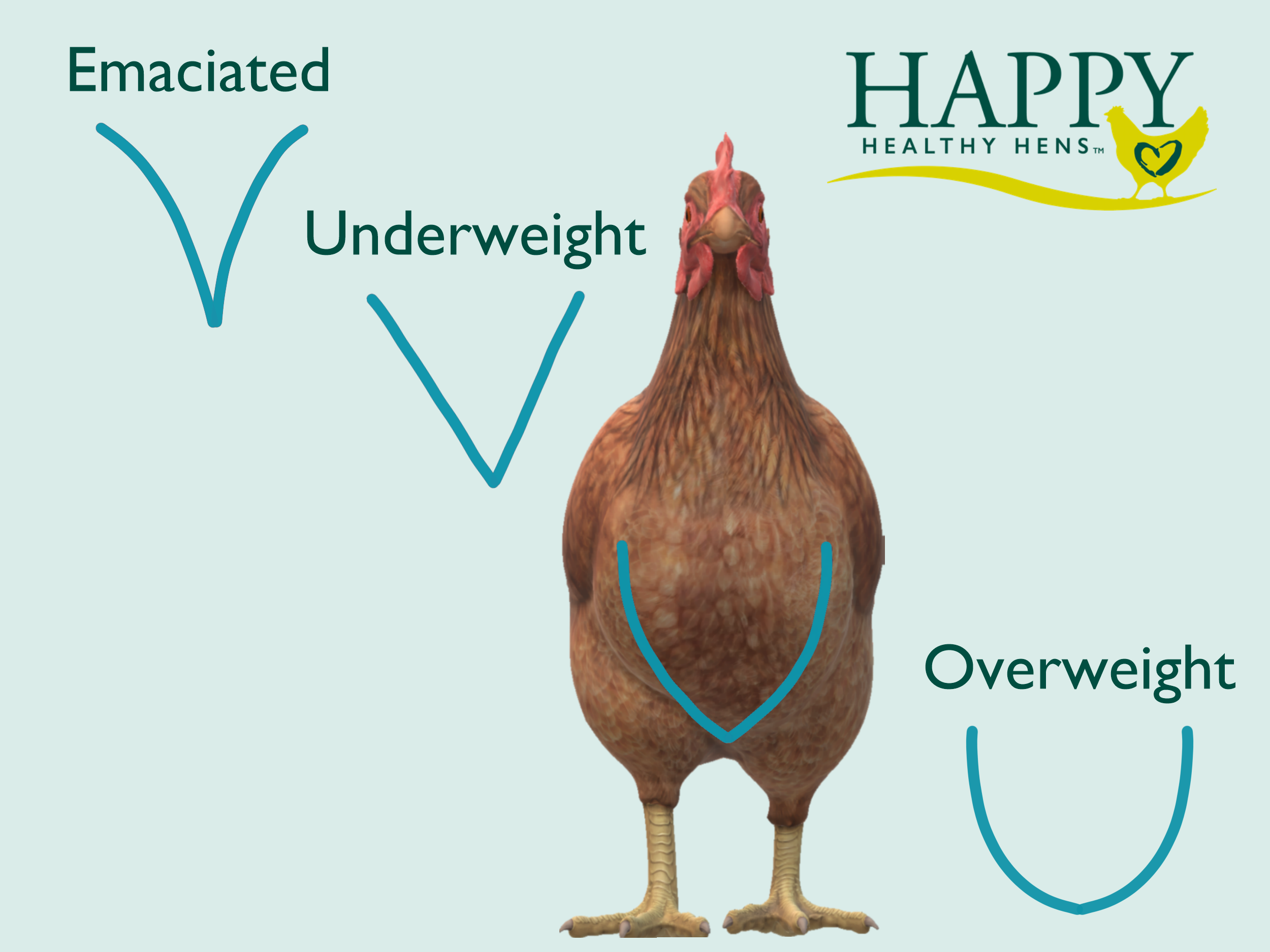
The Body Condition Score Scale (1–4)
BCS 1 – Emaciated: The keel bone has little or no muscle on either side. The breast feels hollow and angular.
What it means: A medical issue is likely: chronic disease, tumours, salpingitis, parasites or severe malnutrition
What to do: Contact your vet urgently and check for worms, lice, mites, and bullying.
BCS 2 – Low Weight: The keel bone has a small amount of muscle alongside it. The chest is narrow and lacks fullness.
What it means: The hen may have an underlying illness, be low in the pecking order, or not getting enough nutrition.
What to do: Consider contacting your vet. Monitor her closely, ensure she gets good access to feed, and consider supplementing with higher‑energy feeds temporarily.
BCS 3 – Normal / Ideal: The muscles on each side of the keel bone feel firm and rounded, creating a smooth contour across the breast.
What it means: This is the perfect condition for most breeds when healthy, active and correctly fed.
What to do: Maintain current feeding and management.
BCS 4 – Overweight: The muscles on each side of the keel bone are thick, soft and well-rounded. The breast feels very full.
What it means: This hen is carrying too much weight. This is common in over-fed and treated birds with limited space for exercise.
She may be dangerously overweight and at higher risk of reproductive and intestinal tumours, egg‑laying problems, heat stress and fatty liver haemorrhagic syndrome.
What to do: Review diet. Offer fewer treats, reduce high‑calorie extras like seeds, and encourage more foraging or movement via space, enrichment and interaction. Speak to a vet about safe weight reduction.
